

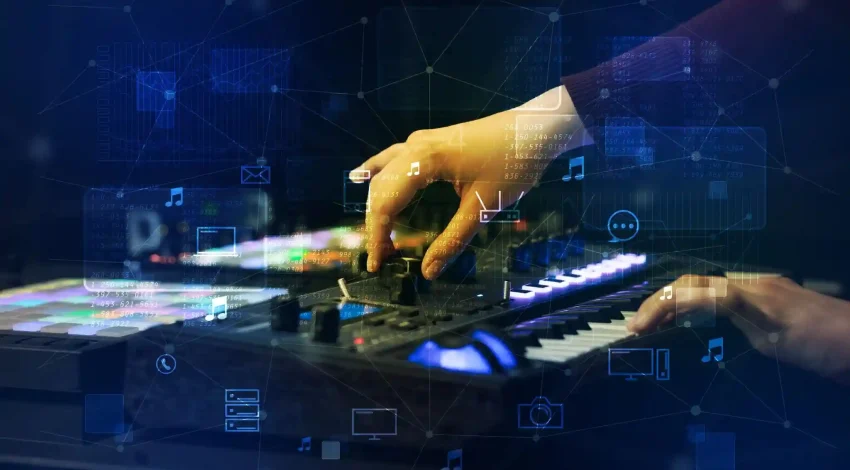
Artificial intelligence has quietly become one of the most influential forces in modern music creation. What once felt experimental or niche is now becoming a standard tool many musicians, producers, and composers rely on daily. AI music generators can now create melodies, write harmonies, generate instrumental layers, produce entire arrangements, and even mimic stylistic patterns that once took years for humans to master.
But AI isn’t here to replace musicians, it’s here to expand creative possibilities. Instead of eliminating human creativity, AI is creating new ways to compose, new workflows, new sound palettes, and entirely new roles for music-makers. Understanding how AI music generators work, and how composers can use them responsibly, opens the door to a new era of creative partnership.
This deep dive explores the mechanics, potential, limitations, and future direction of AI-driven composition in a simple, beginner-friendly way. Whether you’re a producer, songwriter, composer, or just curious about the future of music, this guide will help you understand exactly how AI is reshaping the creative landscape.
What Are AI Music Generators?
AI music generators are tools that use machine learning to create or assist in creating musical compositions. They analyze patterns in rhythm, melody, harmony, and arrangement to produce new musical ideas.
Most AI systems rely on:
-
deep learning
-
neural networks
-
probabilistic modeling
-
large training datasets
-
pattern recognition algorithms
These systems learn how music behaves, not just how it sounds.
Why AI Music Generators Matter
AI tools benefit musicians in several powerful ways:
1. Faster idea generation
AI can instantly create melodies, chord progressions, rhythms, and variations.
2. Breaking creative blocks
When you feel stuck, AI offers fresh musical concepts.
3. Expanding stylistic possibilities
AI can combine genres, styles, and patterns that humans might never think to merge.
4. Learning aid for beginners
AI shows how chords, structure, and melody work in real compositions.
5. Efficiency for professional composers
Film, gaming, and media composers use AI to speed up drafting and sketching.
AI enhances creativity rather than replacing it.
How AI Music Generators Actually Work
To understand AI’s role in composition, it helps to break down what happens behind the scenes.
1. Training Phase
AI models learn from thousands (sometimes millions) of musical examples. They analyze:
-
chord progressions
-
melodic motion
-
rhythmic patterns
-
harmonic relationships
-
structural forms (verse, chorus, etc.)
-
genre signatures
This builds a statistical understanding of “how music tends to behave.”
2. Pattern Prediction
Once trained, the AI predicts the next:
-
note
-
chord
-
rhythmic value
-
instrument
-
section of a song
It uses probability mapping rather than copying specific songs.
3. Generation Phase
This is where the AI outputs:
-
full songs
-
fragments
-
harmonic structures
-
multiple variations
-
style-based compositions
The user can refine or adjust results.
4. Human Refinement
AI outputs are rarely perfect. Musicians typically:
-
edit melodies
-
refine chord voicing
-
adjust timing
-
layer instruments
-
add emotion and nuance
This combination creates a human–AI hybrid composition.
Types of AI Music Generators
AI tools fall into several categories. Each supports a different part of composition.
1. Melody Generators
These tools create single-line melodies based on:
-
key
-
tempo
-
scale
-
mood
-
genre
Great for starting ideas or building hooks.
2. Chord Progression Generators
These generate structured harmonic sequences.Useful for:
-
songwriting
-
beatmaking
-
film scoring
-
reharmonization
They help beginners understand progressions and help experts explore new harmonic possibilities.
3. Rhythm and Drum Pattern Generators
These create:
-
beats
-
percussion loops
-
rhythmic grooves
-
polyrhythms
AI can match styles like EDM, hip hop, lo-fi, or cinematic percussion.
4. Full Song Generators
These systems create:
-
complete arrangements
-
structured sections
-
instrument layers
-
harmonies
Great for sketching concepts quickly.
5. Instrument & Sound Generators
AI-powered synthesizers generate new timbres.Useful for:
-
sound design
-
ambient music
-
textures
-
experimental production
These tools push beyond traditional synthesis.
How AI Enhances Human Composition
AI is not a composer, but it is an incredible assistant.
1. AI Helps You Start Faster
The hardest part of composing is often getting started.AI helps spark ideas instantly.
2. AI Shows New Patterns
AI discovers:
-
unconventional chord movements
-
polyrhythmic grooves
-
surprising melodic leaps
-
hybrid genre combinations
These can inspire unique musical directions.
3. AI Expands Your Musical Vocabulary
It exposes you to:
-
new scales
-
new rhythms
-
new progressions
-
new phrase structures
Beginners learn faster; professionals broaden their toolkit.
4. AI Helps Finish Songs
Stuck on a bridge? Need harmonic variation? AI suggests possibilities.
5. AI Reduces Time on Technical Tasks
Some tools:
-
harmonize melodies
-
clean up timing
-
auto-generate arrangement maps
-
create orchestration ideas
This frees time for emotional and creative decision-making.
Where AI Music Generators Excel
AI shines in specific situations:
1. Rapid brainstorming
Generate 20 ideas in minutes.
2. Background music creation
Perfect for content creators needing quick scoring.
3. Style emulation
AI can model genres quickly.
4. Large-scale scoring templates
Film/game composers benefit from fast sketching.
5. Teaching music theory
AI’s structural patterns are great learning tools.
Where AI Struggles
AI also has limitations that musicians should understand.
1. Emotional authenticity
AI cannot feel emotion — it simulates patterns.
2. Long-form coherence
Long compositions (10–15 minutes) can lose structure.
3. Human nuance
Micro-dynamics, expression, and imperfections often require human touch.
4. Ethical and originality concerns
AI learns from existing music, raising copyright questions.
5. Taste and intention
AI cannot decide artistic meaning.
AI and the Future of Composers
The future is collaboration, not replacement.
Composers will:
-
shape AI outputs
-
provide emotional direction
-
craft unique sound identities
-
integrate AI tools into workflows
-
specialize in curation and refinement
AI becomes another tool — like a synthesizer, sampler, or DAW.
How to Use AI Music Generators Effectively
Here are practical strategies to integrate AI into composition.
1. Use AI for Drafts, Not Finals
Let AI generate:
-
melody seeds
-
chord ideas
-
rhythmic patternsThen refine manually.
2. Create Multiple Variations
AI thrives on variation.Generate:
-
10 melody versions
-
5 chord variations
-
several rhythm ideasMix and match elements.
3. Use AI to Break Creative Blocks
When stuck, ask AI to:
-
extend a section
-
invert a melody
-
reharmonize a phrase
-
suggest counter-melodies
This keeps your momentum alive.
4. Keep Your Artistic Identity
Avoid fully AI-generated songs.Blend:
-
your taste
-
your sound design
-
your performance
-
your arrangement decisions
You are the artist; AI is the assistant.
5. Use AI for Analysis
Some tools can:
-
analyze your track
-
point out harmonic patterns
-
find structural weaknesses
-
suggest improvements
This is like having a virtual mentor.
Ethics of AI in Music
Ethical use matters.
Concerns include:
-
copyright
-
originality
-
dataset bias
-
unauthorized style copying
-
ownership of AI-generated works
The best approach:
-
use AI for inspiration
-
avoid copying styles too closely
-
keep compositions uniquely yours
FAQs
1. Will AI music generators replace human composers?
No. AI can generate patterns and ideas, but it cannot replace emotional intuition, artistic taste, or creative intention. The future of composition is hybrid, AI supports technical and repetitive tasks while humans provide expression, storytelling, meaning, and artistic identity.
2. Is AI-generated music considered original or copied?
AI-generated music is generally original because it creates new patterns rather than copying specific copyrighted works. However, ethical concerns remain regarding training data. Musicians should treat AI output like inspiration, refining and reshaping it to ensure their final music remains personal and authentically original.
3. How can beginners use AI to improve their music skills?
Beginners can use AI to learn chord progressions, understand structure, analyze songs, and generate melody examples. AI also helps practice composition by offering quick feedback and variations. By studying AI suggestions and modifying them, beginners develop stronger intuition and confidence in their musical decision-making.
Conclusion
AI music generators represent one of the most exciting shifts in modern composition. They provide creative support, expand musical possibilities, and help artists explore new directions. But the true power lies in collaboration, the partnership between human expression and AI-driven ideas.
When used thoughtfully, AI can make you a faster, more innovative, and more confident composer. The future of music isn’t machine-made, it’s human creativity amplified by intelligent tools.
Tags:
Share:

Core Pillars of Music Theory Basics for Every...


